Sustainable city design: principles and smart strategies
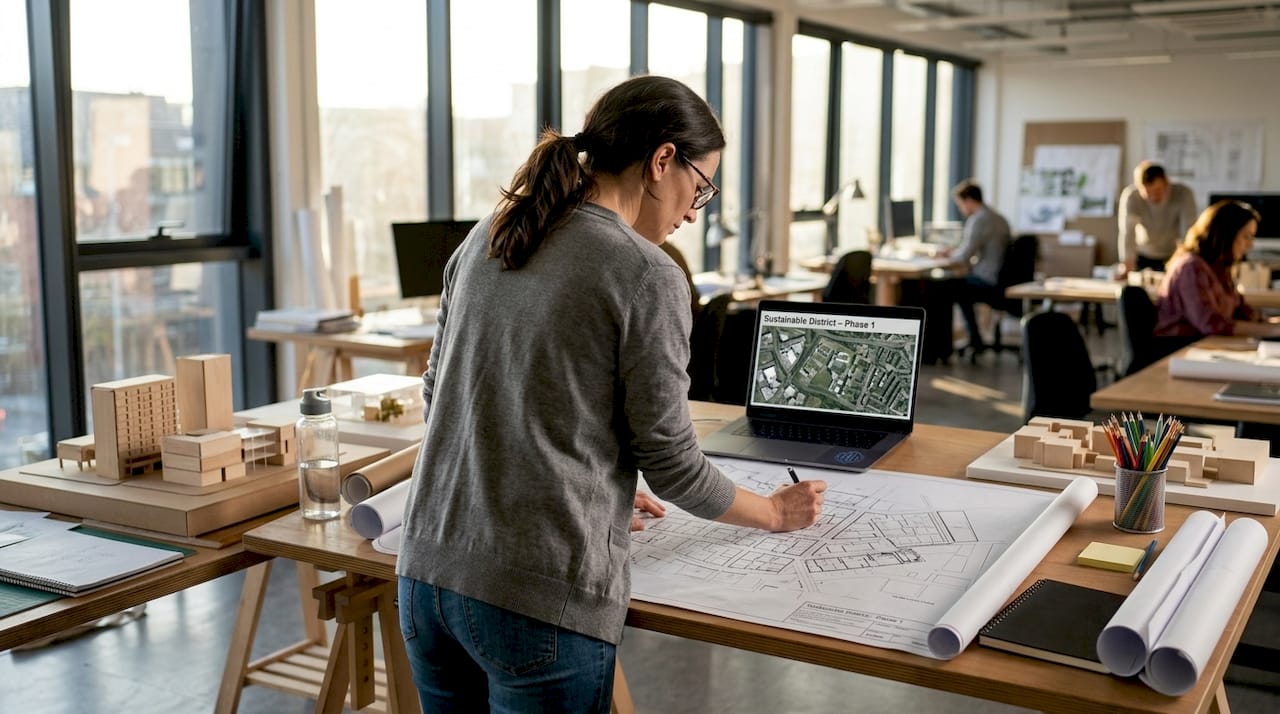
Many professionals assume sustainable city design is primarily about planting trees or installing solar panels on rooftops. In reality, sustainable design transforms the underlying systems of urban living, from how energy flows through a district to how residents move, work, and interact. It is a discipline that demands rigorous thinking, cross-sector collaboration, and increasingly, advanced digital tools. This guide covers the core principles, proven strategies, and technology-driven approaches that urban planners, architects, and developers need to build cities that genuinely perform for people and the planet.
Table of Contents
- Defining sustainable city design
- Core principles behind sustainable urban development
- Key strategies and methods for building sustainable cities
- Harnessing advanced 3D tools in sustainable city design
- Case studies: sustainable city design in action
- Common challenges and expert solutions
- Take your city design process further with advanced tools
- Frequently asked questions
Key Takeaways
| Point | Details |
|---|---|
| Clear definition matters | A sustainable city balances environmental, economic, and social factors for long-term success. |
| Core principles drive decisions | Applying principles like compactness and resource efficiency drives meaningful outcomes in city design. |
| Technology is transformative | Advanced 3D planning tools simplify complex decisions and enhance urban sustainability. |
| Real-world action is possible | Case studies show how sustainable design improves cities globally—these strategies are actionable. |
Defining sustainable city design
Sustainable city design is far more than an aesthetic choice. At its core, it means structuring urban environments so that they can meet present needs without compromising the ability of future generations to meet theirs. Sustainable city design integrates environmental, economic, and social goals into urban planning, creating a framework where each decision reinforces long-term resilience rather than short-term convenience.
The three pillars of sustainable city design are:
- Environmental: Reducing carbon emissions, managing natural resources responsibly, and protecting biodiversity within and around urban areas.
- Economic: Ensuring that development generates lasting value, supports local employment, and avoids costly infrastructure failures down the line.
- Social: Creating inclusive, accessible spaces where all residents, regardless of income or background, can thrive.
The UN sustainable cities agenda frames this as Sustainable Development Goal 11, which calls for cities that are inclusive, safe, resilient, and sustainable. For urban planners and architects, this means optimising city design at every scale, from neighbourhood layout to regional transport networks.
“Sustainable city design is not a single intervention. It is a continuous process of aligning urban systems with long-term human and environmental wellbeing.”
Practitioners who treat sustainability as a checklist rather than a design philosophy tend to produce cities that look green on paper but underperform in practice. The most effective urban design strategies embed sustainability into every layer of decision-making.
Core principles behind sustainable urban development
With a definition in place, it is essential to explore the underlying principles driving successful sustainable cities. These principles are not abstract ideals. They are practical design parameters that shape everything from zoning decisions to infrastructure investment.
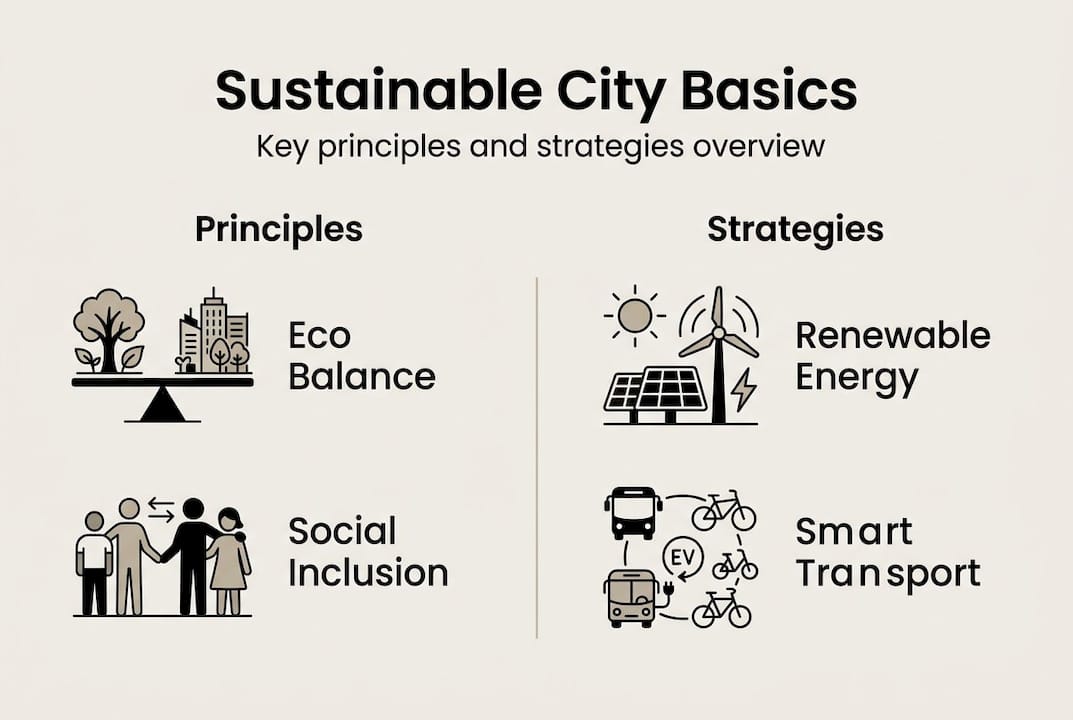
Principles such as compactness, mixed land use, and resource efficiency guide effective urban sustainability. The WRI sustainable city principles provide a globally recognised framework that planners can apply directly to project briefs.
Here are the seven core principles every sustainable city project should address:
- Compactness: Dense, walkable neighbourhoods reduce car dependency and lower per-capita emissions significantly.
- Connectivity: Integrated transport networks, cycling infrastructure, and pedestrian routes link communities and reduce travel times.
- Mixed land use: Combining residential, commercial, and civic functions within the same district reduces commuting and activates streets throughout the day.
- Green infrastructure: Parks, urban forests, green roofs, and permeable surfaces manage stormwater, reduce urban heat, and support mental wellbeing.
- Social inclusion: Affordable housing, accessible public space, and community facilities ensure that sustainability benefits reach all residents.
- Renewable energy: District heating, solar integration, and wind energy reduce reliance on fossil fuels at the city scale.
- Circular resource use: Designing for material reuse, waste reduction, and closed-loop water systems extends the life of urban resources.
Pro Tip: When briefing a project team, map each design decision against these seven principles. If a proposal scores poorly on three or more, it is worth revisiting before detailed design begins. This approach aligns with future-focused city planning methodologies that prioritise systemic thinking over isolated interventions.
Key strategies and methods for building sustainable cities
Understanding the principles, let us look at how these are put into practice through specific strategies and approaches. The gap between principle and delivery is where most projects either succeed or stall.
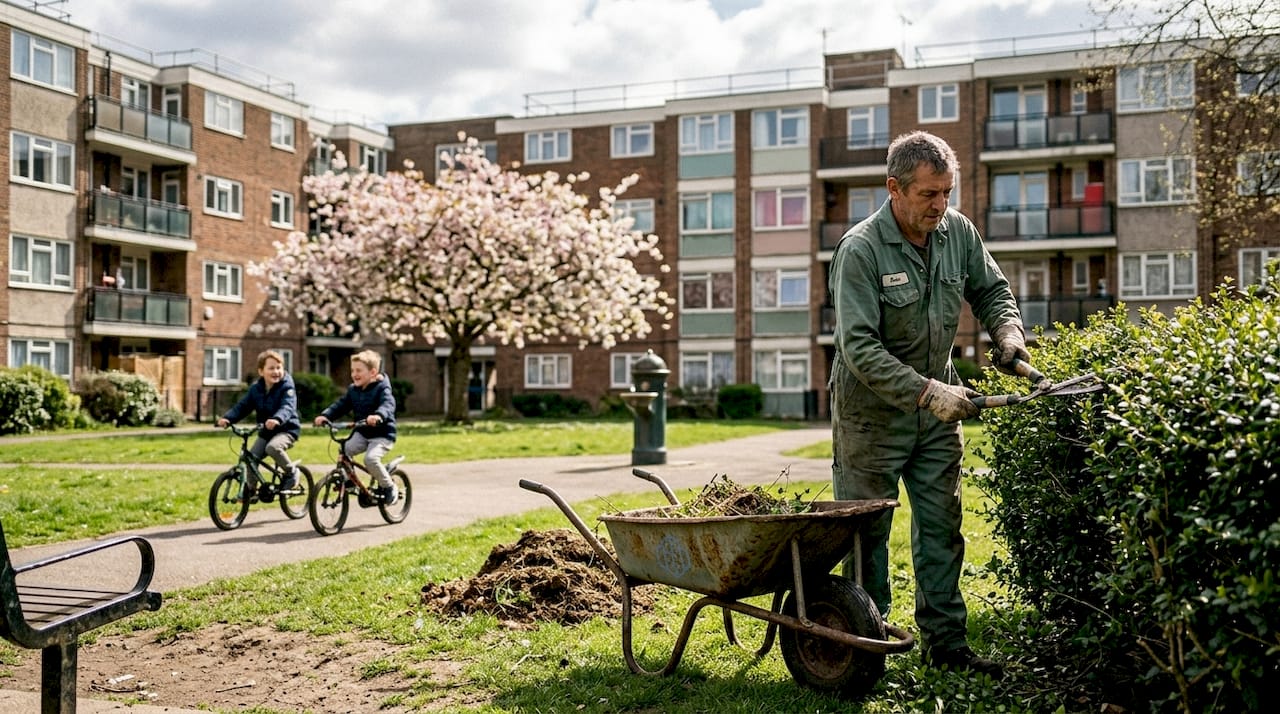
Adoption of green materials, multi-modal transport, and energy-efficient buildings is vital to achieving measurable sustainability outcomes. The C40 Cities initiatives demonstrate how major urban centres are translating these commitments into funded, deliverable programmes.
Key strategies include:
- Transit-oriented development (TOD): Concentrating density around public transport hubs reduces car use and supports economic activity near stations.
- Smart water management: Sensor-based irrigation, greywater recycling, and flood-resilient drainage systems protect cities from climate-related water stress.
- Eco-friendly construction materials: Low-carbon concrete, mass timber, and recycled steel reduce embodied carbon in new buildings significantly.
- Passive design principles: Orientation, natural ventilation, and thermal mass reduce operational energy demand without complex mechanical systems.
The table below compares traditional and advanced approaches across key sustainability dimensions:
| Dimension | Traditional approach | Advanced sustainable approach |
|---|---|---|
| Energy supply | Grid-dependent fossil fuels | Distributed renewables and storage |
| Transport | Car-centric road networks | Multi-modal, transit-oriented design |
| Water management | Linear supply and drainage | Circular systems with reuse and retention |
| Building materials | Standard concrete and steel | Low-carbon and recycled alternatives |
| Community engagement | Consultation at end of design | Co-design from project inception |
Pro Tip: Stakeholder engagement is not a compliance exercise. Involving residents, businesses, and community groups early in the design process surfaces local knowledge that technical models often miss. This is a core element of why city design matters for long-term project success. The role of technology in urban planning is increasingly to facilitate this engagement through immersive visualisation.
Harnessing advanced 3D tools in sustainable city design
An essential factor in the modern era is how advanced technology is shaping city design. 3D planning tools have moved well beyond visualisation. They are now analytical engines that support evidence-based decisions at every project stage.
3D planning technologies enable rapid simulation, visualisation, and optimisation for sustainable outcomes. Platforms that integrate GIS data, Digital Twin environments, and generative design capabilities allow planners to test dozens of scenarios before a single planning application is submitted.
The practical benefits for sustainable city projects include:
- Shadow and solar analysis: Identify optimal building orientations to maximise passive solar gain and minimise overshadowing of public spaces.
- Noise impact modelling: Simulate traffic and industrial noise across proposed layouts to protect residential amenity from the outset.
- Viewshed analysis: Assess visual impact on heritage assets, green corridors, and skylines before committing to massing decisions.
- 4D phasing: Visualise construction sequences and project phases in real time, reducing conflicts and improving programme management.
The table below summarises how 3D tools support specific sustainability goals:
| Sustainability goal | 3D tool capability | Outcome |
|---|---|---|
| Carbon reduction | Energy simulation and solar mapping | Optimised building orientation and form |
| Flood resilience | Terrain and drainage modelling | Reduced flood risk in layout design |
| Transport efficiency | Network connectivity analysis | Better-placed transit nodes and cycling routes |
| Community engagement | Immersive 3D visualisation | Improved public understanding and buy-in |
For planners looking to stay ahead, 3D city planning strategies and 3D technology in urbanism resources offer practical guidance on integrating these tools into existing workflows. The smart city technology sector continues to evolve rapidly, with new capabilities emerging each year.
Case studies: sustainable city design in action
With tools and strategies explained, practical examples bring these concepts to life. Three cities stand out as consistent benchmarks for sustainable urban development.
Cities leveraging advanced planning see significant emissions reductions, improved resource use, and enhanced urban liveability. Here is what each leading city demonstrates:
- Singapore: The city-state’s Virtual Singapore project created a detailed 3D Digital Twin of the entire urban environment, enabling planners to model solar energy potential, emergency response routes, and population growth scenarios simultaneously. The result is a planning system that is genuinely predictive rather than reactive.
- Amsterdam: The city’s circular economy strategy targets zero waste by 2050, with construction and demolition waste reuse already exceeding 90%. Amsterdam’s approach to urban planning with environmental assessment integrates material flow analysis directly into planning decisions.
- Copenhagen: The Danish capital achieved carbon neutrality in 2025, supported by district heating networks, an extensive cycling infrastructure covering over 390 kilometres, and wind energy supplying more than 50% of the city’s electricity.
The lesson from all three cities is consistent. Sustainable outcomes at scale require long-term political commitment, integrated data systems, and a willingness to invest in planning tools that support evidence-based decisions. The Arup Singapore Smart City project offers a detailed account of how Digital Twin technology underpinned Singapore’s planning transformation.
Common challenges and expert solutions
Even with the right strategies, implementing sustainable city design comes with real-world obstacles. Recognising these barriers early allows project teams to build mitigation into the programme from the start.
Barriers such as funding limitations, policy inertia, and community resistance can undermine sustainability goals even in well-resourced projects. The urbanet guidance on overcoming barriers identifies these as systemic issues that require systemic responses.
Common challenges and practical solutions:
- Funding gaps: Sustainable infrastructure often has higher upfront costs. Solution: use whole-life cost modelling to demonstrate long-term savings to investors and public sector clients.
- Regulatory inertia: Outdated planning codes can block innovative design. Solution: engage planning authorities early with visualisation tools that make the case for design departures clearly and compellingly.
- Public resistance: Communities often oppose change, particularly density increases. Solution: use immersive 3D visualisation to show residents what proposals will actually look like, reducing fear of the unknown.
- Legacy infrastructure: Existing utilities and transport networks constrain new development. Solution: integrate infrastructure data into 3D models to identify constraints and opportunities before design begins.
“The most effective response to planning barriers is not to work around them, but to use better evidence and clearer communication to resolve them at source.”
For teams seeking structured approaches, optimising city planning with 3D tools provides a practical framework for overcoming these obstacles using digital planning platforms.
Take your city design process further with advanced tools
The principles, strategies, and case studies covered in this article point to one consistent conclusion: sustainable city design at scale requires tools that match the complexity of the challenge. 3D Cityplanner brings together the capabilities that urban planners, architects, and developers need in a single, accessible platform.
From automated building generation and noise simulation to 4D phasing and stakeholder visualisation, the 3D Cityplanner overview shows how these tools integrate into real project workflows. Whether you are working on a masterplan, a planning application, or a community engagement exercise, the city planning tool benefits are tangible and measurable. You can explore the platform through a trial period without any upfront commitment, making it straightforward to assess its value against your current project pipeline.
Frequently asked questions
What makes a city design ‘sustainable’?
Sustainable city design integrates environmental, social, and economic objectives to create resilient, liveable urban spaces that function effectively for current and future generations.
How do 3D planning tools improve sustainable urban development?
3D planning technology supports simulation and optimisation, enabling planners to test scenarios, visualise impacts, and refine designs before committing to costly construction.
What are the main challenges in implementing sustainable city design?
Key challenges include funding, policy delays, and resistance to change, all of which can be addressed through better evidence, stakeholder engagement, and digital planning tools.
Which global cities lead in sustainable urban development?
Singapore, Amsterdam, and Copenhagen are recognised leaders, each demonstrating that long-term commitment to integrated planning, data-driven decision-making, and investment in green infrastructure produces measurable results.
Recommended
- Why optimise city planning: 3D tools for better design – 3D Urban Development
- Top city planning strategies using advanced 3D technology – 3D Urban Development
- Top urban development strategies for city optimisation 2026 – 3D Urban Development
- Why Optimise City Design for Sustainable Cities – 3D Urban Development


