3D city simulations: 5 leading examples for urban innovation
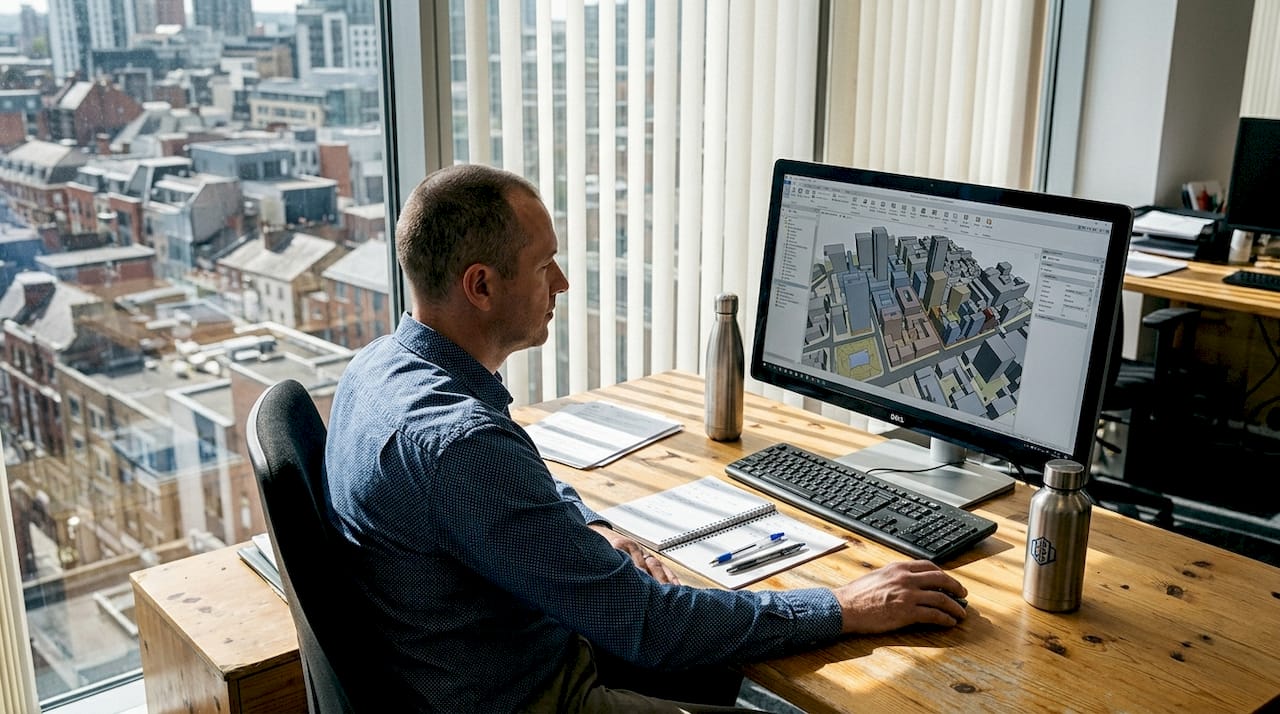
The number of 3D city simulation platforms available to urban professionals has grown sharply over the past decade, making selection genuinely complex. Not every tool delivers the same depth: some excel at visualisation, others at real-time scenario modelling, and a few integrate citizen participation alongside sensor data. Choosing the wrong platform can mean investing significant resources into a tool that cannot answer your city’s most pressing questions. This article examines five leading examples of 3D city simulations, the criteria that separate robust decision-support tools from polished but shallow visualisations, and a practical framework for matching the right platform to your project goals.
Table of Contents
- Key criteria for evaluating 3D city simulations
- Virtual Gothenburg: A city-scale digital twin
- TOOLS4CITIES: Gamified and professional 3D simulations
- 3DCityDB: Open-source backbone for professional 3D simulations
- Unity-based London: High-accuracy urban traffic simulation
- Matera UDT: Sensor-rich, participatory city optimisation
- Comparison of leading 3D city simulation platforms
- Choosing the right 3D simulation for your urban project
- Take your urban development further with advanced 3D simulation
- Frequently asked questions
Key Takeaways
| Point | Details |
|---|---|
| Criteria for simulation choice | Evaluate platforms for scope, data integration, real-time capabilities, and professional outputs. |
| Leading simulation examples | Top platforms—such as Virtual Gothenburg, TOOLS4CITIES, and 3DCityDB—offer advanced scenarios, engagement, and reliability. |
| Comparison aids selection | A direct comparison of main features streamlines decision-making for urban professionals. |
| Emerging participatory models | Innovative simulations now blend real-time data, sensor integration, and citizen participation. |
| From insight to action | The right 3D simulation tool can transform city planning and stakeholder collaboration. |
Key criteria for evaluating 3D city simulations
Before examining specific platforms, it helps to establish a consistent evaluation framework. Simulations vary greatly in scope, from real-time interaction to complex scenario prediction and integration with city data. That range means a tool suited for traffic modelling may be entirely unsuitable for energy performance analysis or public engagement.
When assessing any platform, consider the following criteria:
- Breadth of simulation: Does the tool cover traffic, weather, construction phasing, energy consumption, and social scenarios, or is it limited to a single domain?
- Data integration: Can it ingest real-time feeds, historical datasets, GIS layers, and participatory inputs from residents or stakeholders?
- Technological foundation: Is it built on a game engine such as Unreal or Unity, an open-source framework, or a browser-based interface accessible without specialist hardware?
- Visualisation and reporting: Does it produce outputs that are genuinely useful for planning committees, public consultations, and policy documents?
- Scalability: Can it handle a single neighbourhood, a district, or an entire metropolitan area without performance degradation?
Understanding digital twin urban planning principles is essential here, because the strongest platforms function as living simulation environments rather than static 3D renders. The distinction matters enormously when you need to test a policy intervention before committing public funds.
Pro Tip: Before shortlisting platforms, document your city’s primary simulation needs in order of priority. A tool that scores highly on traffic modelling but poorly on energy analysis may still be the right choice if mobility is your dominant challenge.
The role of digital twins in city planning continues to expand, and the platforms below represent the current state of the art across different use cases.
Virtual Gothenburg: A city-scale digital twin
Virtual Gothenburg is one of the most cited examples of a city-scale 3D simulation in active professional use. Virtual Gothenburg covers 700 km² using a parametric 3D model built on Unreal Engine, enabling scenario prediction and real-time control across the entire city.
The platform supports a wide range of simulation types:
- Traffic flow and congestion modelling
- Sun and shadow analysis across different seasons
- Air quality and pollution dispersion
- Flood risk and stormwater management
- Autonomous vehicle pathway testing
“The model is used for scenario prediction, real-time control, and effective communication with decision-makers and the public.” — City of Gothenburg
What makes Virtual Gothenburg particularly instructive is its dual purpose. It serves as an internal planning tool for city engineers and as a communication platform for elected officials and residents. That combination of technical depth and public accessibility is rare. Explore how digital twins in urban planning are reshaping evidence-based decision-making across comparable cities.
TOOLS4CITIES: Gamified and professional 3D simulations
Developed by researchers at Concordia University, TOOLS4CITIES takes a deliberately dual approach: one tool for public engagement, another for professional scenario analysis. TOOLS4CITIES delivers real-time sustainability metrics through both CITYplayer and CITYlayers, making it one of the few suites that bridges community participation and specialist planning in a single framework.
Here is how the two components work in practice:
- CITYplayer presents neighbourhood redesign as an interactive, gamified experience. Residents can adjust building heights, green space allocations, and street layouts, with the platform calculating the sustainability impact of each change in real time.
- CITYlayers is a browser-based tool aimed at professionals. It overlays data layers covering energy consumption, carbon emissions, and retrofit scenarios, allowing planners to compare intervention strategies without specialist software installation.
- Both tools have been deployed in active urban pilots, where public participation data feeds directly into policy prototyping sessions.
The gamified element is not a gimmick. When residents can see the direct consequence of a planning decision, their feedback becomes far more specific and actionable. Professionals working with 3D city modelling tools will recognise the value of closing the gap between technical analysis and community understanding.
3DCityDB: Open-source backbone for professional 3D simulations
Not every city has the budget for a bespoke platform. 3DCityDB addresses this by providing an open-source database management system that underpins a wide range of professional simulations globally. 3DCityDB supports planning, energy, and disaster management simulations in cities including Munich, Berlin, and Singapore.
Key technical capabilities include:
- Levels of Detail (LoD1 to LoD4): From simple block models to fully detailed building interiors, enabling the right resolution for each analysis type
- CityGML 3.0 compliance: Ensuring interoperability with other GIS and planning systems
- Semantic hierarchies: Allowing planners to query specific building attributes, infrastructure components, or land-use categories
- Export to multiple standards: Including formats compatible with VR environments and specialist engineering software
Pro Tip: If your organisation already uses a GIS platform, check whether 3DCityDB’s CityGML export aligns with your existing data pipeline before committing to a full integration project. Compatibility at the data layer saves considerable time downstream.
For teams evaluating city visualisation platforms, 3DCityDB offers a transparent, internationally validated foundation that can be extended with custom simulation modules as project needs evolve.
Unity-based London: High-accuracy urban traffic simulation
London’s Unity-based digital twin demonstrates what is achievable when accuracy is the primary design goal. This platform achieves sub-metre spatial accuracy, with a root mean square error of 0.15 metres or less, and supports real-time simulation of more than 60,000 entities simultaneously.
The platform draws on multiple data sources:
- Google Maps and BlenderGIS for high-resolution base geometry of the City of London
- CityEngine for procedural building generation and street-level detail
- Real-time feeds for live traffic state, weather conditions, and electric vehicle charging demand
The result is a simulation environment where planners can test the impact of a new bus lane, a road closure, or a surge in EV adoption without any real-world disruption. That level of fidelity is particularly valuable in dense urban contexts where small changes cascade rapidly through the transport network.
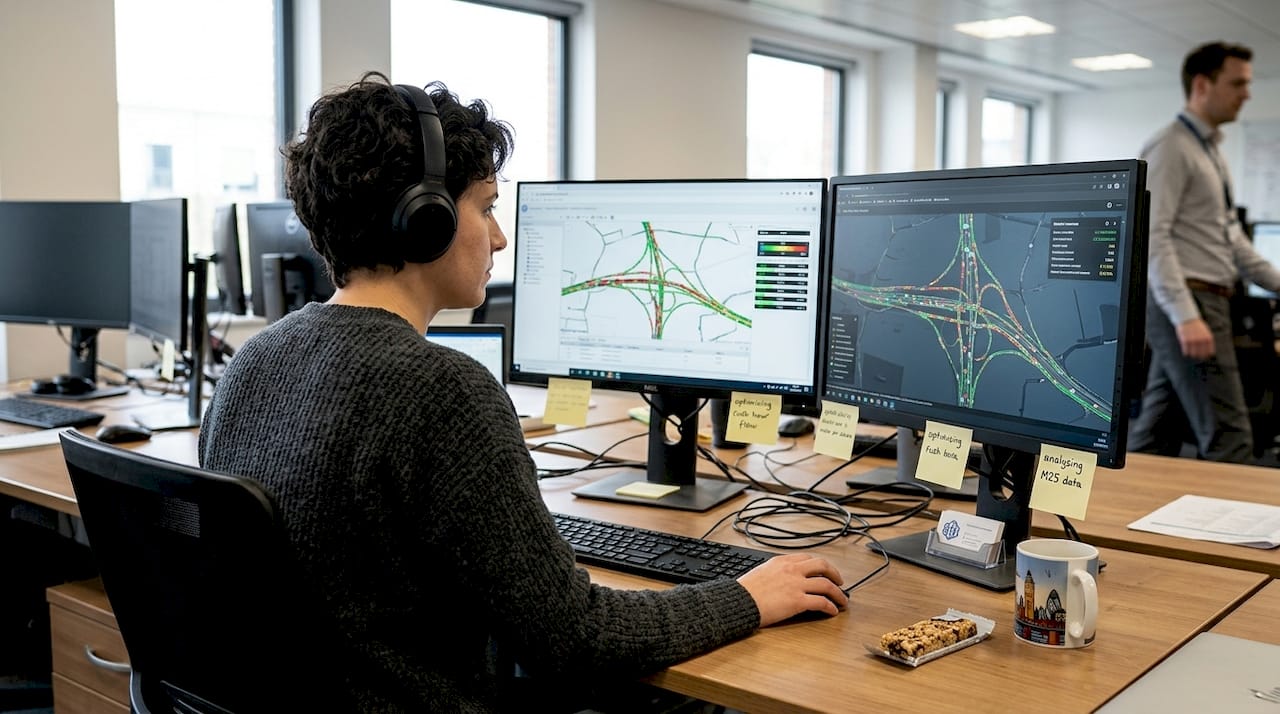
For professionals focused on efficient 3D planning, the London model illustrates how combining multiple open data sources within a single engine can produce results that rival purpose-built proprietary systems.
Matera UDT: Sensor-rich, participatory city optimisation
Matera’s Urban Digital Twin (UDT) represents a different philosophy: rather than starting with geometry and adding data, it begins with the city as a living system and builds the simulation around continuous data flows. Matera UDT integrates laser-scan models, sensor feeds, and citizen data for predictive traffic, solar harvesting, and evacuation simulations.
The platform’s capabilities include:
- Optimal evacuation route modelling based on real-time crowd and infrastructure data
- Solar energy harvesting analysis at building and district scale
- Predictive traffic management informed by sensor networks
- A Data Lake architecture that integrates analysis, planning, and resilience modules
“The fusion of physical, digital, and citizen-generated data creates a simulation environment that reflects the city as it actually behaves, not as it was designed to behave.”
This participatory dimension is significant. When citizen-generated data feeds into evacuation modelling or solar planning, the outputs reflect actual behaviour patterns rather than theoretical assumptions. Professionals exploring digital twin cities will find Matera UDT a compelling model for resilience-focused urban optimisation.
Comparison of leading 3D city simulation platforms
With each platform examined in detail, a side-by-side comparison helps clarify which tool best fits a given project context. Use this table to inform your initial shortlisting process when considering how to create 3D city models for urban planning.
| Platform | Scale | Primary use case | Technology | Public engagement | Open source |
|---|---|---|---|---|---|
| Virtual Gothenburg | City-wide (700 km²) | Scenario prediction, policy communication | Unreal Engine | Yes | No |
| TOOLS4CITIES | Neighbourhood to district | Sustainability, community participation | Game engine + browser | Yes (gamified) | Partial |
| 3DCityDB | Flexible (global use) | Energy, disaster, planning data management | Open-source database | No | Yes |
| London Unity twin | City district | Traffic, mobility, EV simulation | Unity + GIS data | No | No |
| Matera UDT | City-wide | Resilience, solar, evacuation | Sensor + laser scan | Yes (citizen data) | No |
Each platform has a distinctive strength. Virtual Gothenburg leads on breadth and communication. TOOLS4CITIES excels at participatory design. 3DCityDB offers the most flexible open-source foundation. London’s Unity twin sets the benchmark for spatial accuracy. Matera UDT is the strongest choice for resilience and sensor-driven analysis.
Choosing the right 3D simulation for your urban project
Platform selection depends on simulation needs, data interoperability, and local priorities. No single platform is universally optimal. Use this practical framework to guide your decision:
- Define your primary simulation objective. Is it traffic analysis, energy performance, public consultation, disaster resilience, or a combination? Rank your needs before evaluating any tool.
- Audit your existing data ecosystem. Identify which GIS formats, sensor feeds, and historical datasets you already hold. A platform that cannot ingest your data is not a viable option regardless of its feature set.
- Assess your stakeholder landscape. If public engagement is central to your project, prioritise tools with participatory interfaces. If your audience is primarily technical, depth of analysis matters more than accessibility.
- Pilot before committing. Run a bounded test on a single district or project phase. Measure how well the platform handles your actual data, not demonstration datasets.
- Plan for iteration. Urban projects evolve. Choose a platform that can incorporate new data sources and simulation modules as your project progresses.
For teams considering 4D simulation for planners, adding a temporal dimension to your 3D model can significantly improve construction phasing decisions and long-term scenario planning.
Pro Tip: Involve your GIS team and key stakeholders in the pilot evaluation, not just technical leads. The platform that wins on specification sheets may lose on usability when the people who need it most cannot navigate it confidently.
Take your urban development further with advanced 3D simulation
The platforms reviewed here represent the leading edge of what 3D city simulation can deliver for urban professionals. Each one demonstrates that the gap between visualisation and genuine decision support is bridgeable, provided you select the right tool for your context.
If you are ready to apply these principles to your own projects, 3DCityPlanner offers a professional-grade platform built specifically for urban development teams. From automatic building generation and line-of-sight analysis to sound simulation and 4D project timelines, it brings the capabilities described in this article into a single, accessible environment. Explore the full range of features with a city planning tool trial and see how advanced simulation can strengthen your next planning decision.
Frequently asked questions
What are the main benefits of using 3D city simulations for urban planning?
3D city simulations deliver evidence-based insights, improve stakeholder communication, and enable scenario testing before any physical intervention. Virtual Gothenburg’s model demonstrates how a single platform can serve both technical planning and public communication simultaneously.
How do open-source platforms like 3DCityDB support professional urban simulations?
They enable complex modelling, data interoperability, and broad adoption across energy, disaster management, and planning tasks without licensing costs. 3DCityDB is used internationally in cities including Munich, Berlin, and Singapore for precisely these purposes.
Can 3D city simulations incorporate citizen input for planning?
Yes. Tools such as TOOLS4CITIES and Matera UDT allow participatory data integration, improving the realism and policy relevance of simulation outputs. Matera UDT incorporates citizen data alongside sensor feeds and morphological information for predictive modelling.
What simulation accuracy is achievable with modern city models?
Some platforms reach sub-metre precision. London’s Unity-based twin achieves a root mean square error of 0.15 metres or less, supporting real-time simulation of more than 60,000 entities.
Which platform is recommended for city-wide scenario planning?
Comprehensive digital twins such as Virtual Gothenburg offer the broadest simulation capabilities and city-wide data integration. Virtual Gothenburg supports multiple scenarios at scale, making it a strong reference point for city-wide planning ambitions.
Recommended
- Top city planning strategies using advanced 3D technology – 3D Urban Development
- 6 Best City Planning Best Practices for Urban Modelling – 3D Urban Development
- Top urban development strategies for city optimisation 2026 – 3D Urban Development
- Examples of 3D urban design in Europe: 60% collaboration boost – 3D Urban Development


