Top 3D city visualisation examples for smarter planning
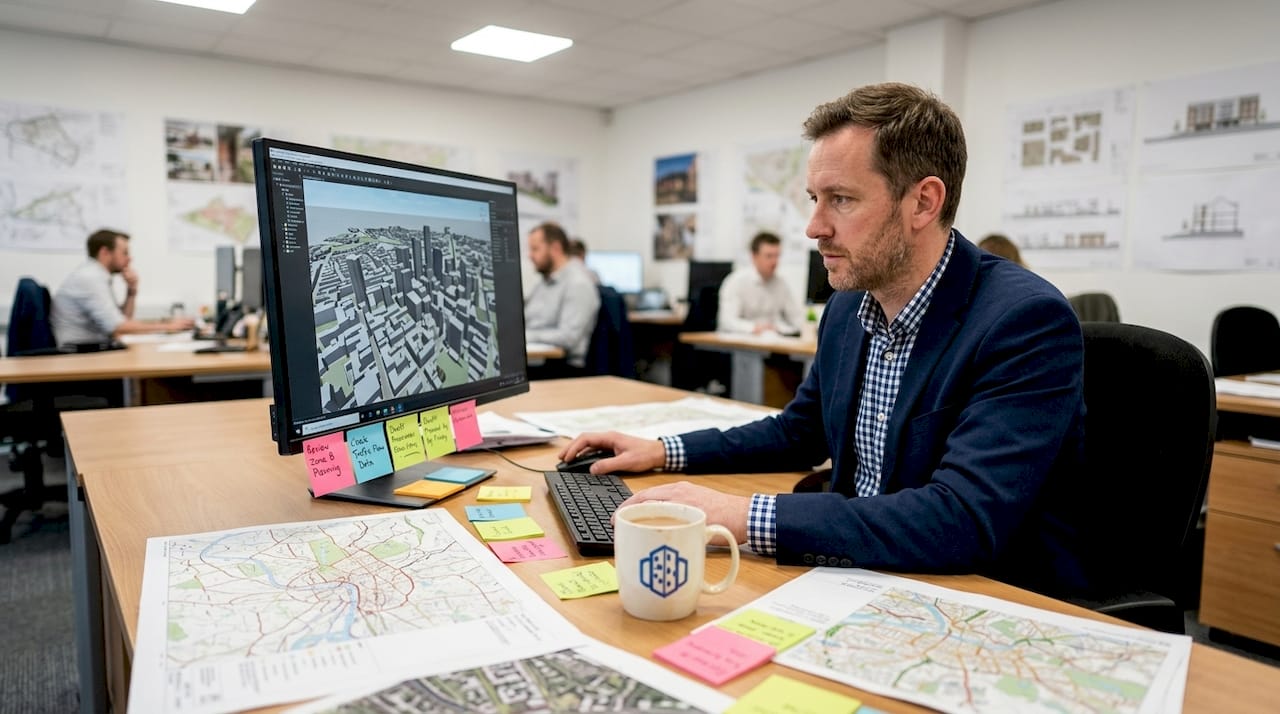
Urban planning teams are under growing pressure to handle increasingly complex datasets, satisfy public transparency requirements, and deliver decisions faster than ever. The range of available 3D city visualisation tools has expanded dramatically, spanning open government datasets to sophisticated commercial platforms. Choosing the wrong tool wastes budget, creates integration headaches, and can undermine stakeholder confidence. This article walks through what defines a high-quality 3D city visualisation, examines leading open and commercial examples, and offers a practical framework for deciding which approach fits your project.
Table of Contents
- What makes a strong 3D city visualisation?
- Open 3D city models: Helsinki, Espoo, and Japan’s PLATEAU
- Commercial tools for professional city visualisation: VU.CITY, CityEngine, and 3D Cityplanner
- When to choose open models vs. commercial systems
- Why best practice means balancing open standards with workflow integration
- Discover future-ready city planning tools
- Frequently asked questions
Key Takeaways
| Point | Details |
|---|---|
| Criteria matter | Define your project’s needs before selecting a 3D city visualisation tool. |
| Open and commercial options | Both open models and commercial tools have unique advantages for urban planners. |
| Comparison guides decision | Structured comparisons clarify which 3D visualisation solution best fits each use case. |
| Best results blend approaches | Combining open standards with workflow-friendly tools achieves optimal planning outcomes. |
What makes a strong 3D city visualisation?
Not all 3D city models are created equal. Before you invest time or budget in any platform, it pays to assess it against a consistent set of criteria. The most capable tools share several defining characteristics that separate genuinely useful visualisations from visually impressive but operationally limited ones.
For a thorough [3D urban visualisation overview](https://3dcityplanner.com/en/3d urban visualization.html), the following qualities matter most:
- Semantic richness: Buildings, roads, and green spaces should carry meaningful attribute data, not just geometry. Semantic layers allow planners to query, filter, and analyse rather than simply view.
- Data accuracy and currency: Outdated geometry or incorrect building heights erode trust. Look for models with documented update cycles and clear data provenance.
- Workflow integration: Can the model connect to your GIS environment, BIM pipeline, or planning management system? Isolated visualisations create silos.
- Scalability: A tool that handles a single district must also perform across an entire metropolitan region without degrading.
- Real-time data handling: Traffic flows, environmental sensors, and construction timelines increasingly need to feed live into city models.
- Portal and user accessibility: Stakeholders beyond the technical team, including elected officials and the public, need usable interfaces.
Research benchmarking city datasets confirms that open models have made genuine progress, yet gaps in semantic depth and portal quality remain common. As one assessment notes:
“Empirical benchmarks show progress in open models but gaps in semantics and portals remain a persistent challenge for widespread adoption.”
Commercial tools often fill these workflow gaps but may trade off openness and interoperability. Neither category is automatically superior. The right choice depends on your project’s specific demands, which the sections below will help you clarify.
Open 3D city models: Helsinki, Espoo, and Japan’s PLATEAU
Open 3D city models are rapidly expanding in scope and quality. The 3D City Index 2025 benchmarks 47 open 3D city models worldwide, with European cities such as Helsinki and Espoo consistently ranking among the strongest performers. Japan’s national PLATEAU initiative signals a growing trend towards coordinated, government-led 3D datasets at scale.
Here is how the leading open models compare across key dimensions:
| City or initiative | Data coverage | Semantic depth | Portal quality | Open licence |
|---|---|---|---|---|
| Helsinki | High | Strong | Good | Yes |
| Espoo | High | Moderate | Moderate | Yes |
| Japan PLATEAU | Very high | Strong | Developing | Yes |
| Rotterdam | Moderate | Strong | Good | Yes |
What makes Helsinki particularly instructive is its combination of detailed building geometry, thematic layers such as noise and solar potential, and a publicly accessible web portal. Espoo follows a similar approach, though its semantic attributes are less mature. PLATEAU is notable for its national scale, covering hundreds of Japanese cities with consistent data standards, even if portal interfaces are still catching up.
Key lessons from these open models for urban professionals:
- Open data enables reusability across departments and external research partners.
- Transparent data provenance builds public trust during consultation processes.
- Consistent standards allow cities to benchmark against peers and align with national frameworks.
- Even leading models show semantic gaps, particularly around indoor data and real-time feeds.
Understanding the role of 3D models in architecture and urban planning helps contextualise why semantic richness matters so much in practice.
Pro Tip: Use available open city models as a baseline dataset within your commercial platform. This reduces data acquisition costs and provides a peer-reviewed starting point for analysis.
Open models are not a finished product. They are a foundation. The cities achieving the best outcomes treat them as living datasets, continuously improved through feedback from planners, developers, and the public.
Commercial tools for professional city visualisation: VU.CITY, CityEngine, and 3D Cityplanner
Open options can be game-changers, but many urban professionals turn to commercial platforms for their advanced capabilities and seamless workflows. Commercial tools such as VU.CITY and CityEngine prioritise workflow integration and professional-grade visualisation, making them well suited to large-scale urban development projects.
| Platform | Key strengths | Data compatibility | Collaboration | Learning curve |
|---|---|---|---|---|
| VU.CITY | High-detail urban models, planning overlays | Proprietary, GIS import | Good | Moderate |
| CityEngine | Procedural generation, rule-based modelling | CityGML, GIS, BIM | Limited | High |
| 3D Cityplanner | Real-time 4D planning, open-data integration | CityGML, GIS, IFC | Strong | Low |
VU.CITY excels at producing photorealistic city models for stakeholder presentations and planning applications. It is widely used in the UK for development management. CityEngine, from Esri, offers powerful procedural modelling for generating large urban areas rapidly, though it demands considerable technical expertise.
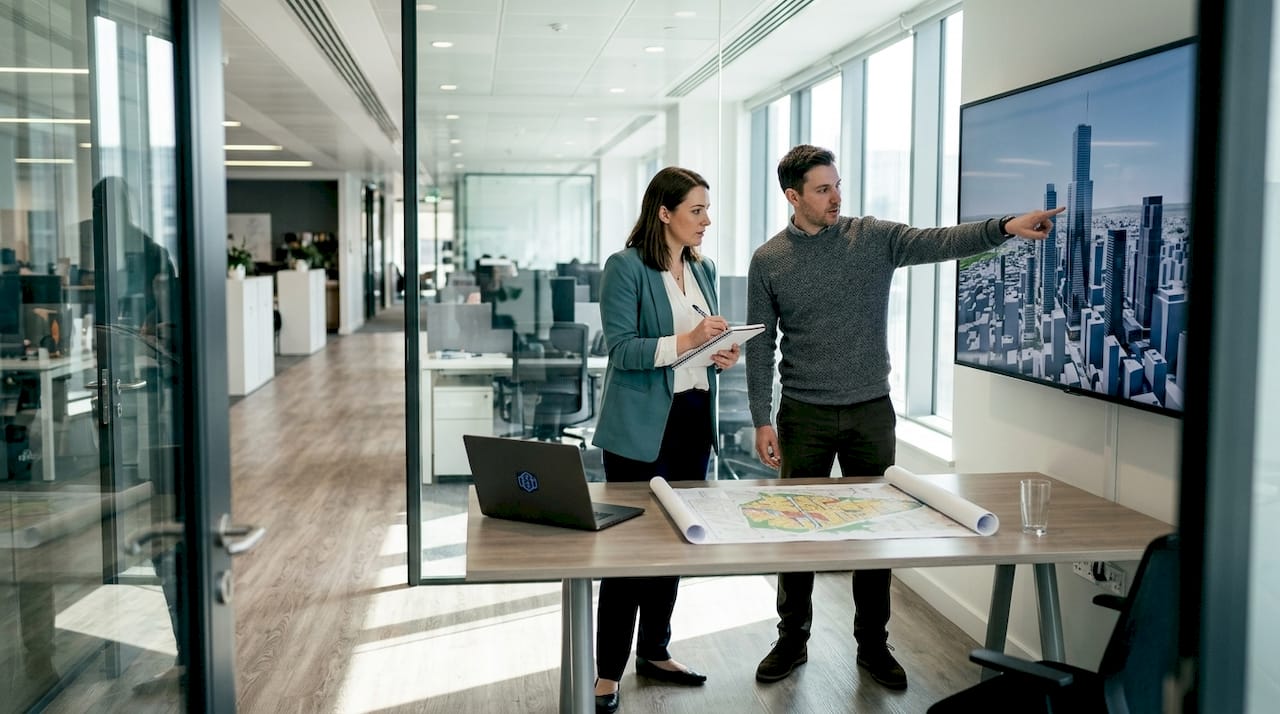
3D Cityplanner stands out for its accessible interface combined with genuinely advanced functionality. Its features include automatic building generation, line-of-sight analysis, noise simulation, and 4D timeline planning, all within a browser-based environment that reduces the barrier for non-specialist stakeholders.
Notably, 3DCityDB v5 supports CityGML 3.0 for semantic 3D models and has been deployed in cities including Berlin, Rotterdam, and Helsinki, demonstrating that open standards and commercial workflows can coexist.
Key feature considerations when evaluating commercial tools:
- Real-time collaboration: Can multiple stakeholders edit and comment simultaneously?
- Import flexibility: Does the platform accept CityGML, IFC, and common GIS formats?
- Analysis depth: Beyond visualisation, can it simulate noise, shadow, or traffic impact?
- Support and training: Is professional onboarding available, and how active is the user community?
Pro Tip: Pair a commercial 3D modelling tool with open city data from platforms like Helsinki or PLATEAU. You gain the analytical power of commercial software with the transparency and cost efficiency of open datasets.
When to choose open models vs. commercial systems
Urban projects are rarely one-size-fits-all. The decision between open data models and commercial systems should follow a structured assessment rather than habit or budget alone.
Decision framework: choosing your approach
- Define project scale. City-wide masterplans benefit from open standards and interoperability. Site-specific development proposals often need the precision and presentation quality of commercial tools.
- Assess stakeholder needs. Public participation processes require accessible portals. Technical teams need analytical depth. Some projects need both.
- Check data availability. If a high-quality open model already exists for your city, using it as a foundation can save months of data preparation.
- Evaluate integration requirements. If your workflow connects to GIS, BIM, or asset management systems, confirm compatibility before committing.
- Consider long-term maintenance. Open models rely on community or government updates. Commercial platforms offer managed data services but at ongoing cost.
To put this in context: 47 open city models were benchmarked in 2025, yet significant variation in quality means you cannot assume an open model will meet your project’s needs without evaluation.
Open standards such as CityGML and 3DCityDB emphasise interoperability and scalability, but they require technical expertise to implement effectively. Commercial tools bring speed and polished interfaces, but they can create vendor dependency if not managed carefully.
For guidance on creating city models and structuring urban development workflows, the most resilient approach is often hybrid: open standards for the data backbone, commercial tools for analysis and stakeholder engagement.
“The cities achieving the strongest planning outcomes are not choosing between open and commercial. They are building bridges between them.”
Hybrid approaches allow rapid prototyping with commercial tools while maintaining interoperability through open data standards, giving your team flexibility without sacrificing long-term scalability.
Why best practice means balancing open standards with workflow integration
Conventional wisdom tends to frame open and commercial tools as opposing choices. In practice, that framing is unhelpful and often leads to suboptimal decisions. The most capable city planning teams we observe are not debating open versus commercial. They are asking how to make both work together.
Empirical benchmarks confirm that even the best open models carry ongoing challenges in semantics and accessibility. Commercial platforms address many of these gaps but introduce their own constraints around openness and cost. Neither is a complete solution on its own.
The strongest outcomes emerge when standards-based, interoperable models form the data backbone and commercial tools supply flexible, user-friendly workflows. This is not a compromise. It is a deliberate architecture for smarter city planning that serves both technical rigour and public accountability. Cities that treat this as a binary choice will find themselves either locked into proprietary systems or struggling with data quality gaps that undermine stakeholder confidence. The professionals leading the field have moved past that debate entirely.
Discover future-ready city planning tools
For those ready to enhance their urban planning practice with hands-on tools, here is where to start. Advanced platforms like 3D Cityplanner are built precisely to bridge the gap between open data standards and professional workflow demands. Whether you are managing a large-scale masterplan or a targeted infrastructure project, the platform supports both proprietary workflows and open-data integration in a single environment.
Explore the full range of capabilities available through the city planning tool, from 4D timeline planning to noise simulation and real-time collaboration. A free trial is available with no upfront commitment, giving your team the opportunity to test its fit against your actual project requirements before making any decision.
Frequently asked questions
What is an example of a 3D city visualisation used for real planning?
Helsinki’s 3D city model integrates detailed semantic data and a public portal to support both professional planning decisions and community engagement processes.
What are the benefits of using open 3D city models?
Open 3D models encourage transparency, reusability, and innovation, while also helping local projects align with national initiatives like PLATEAU and broader interoperability standards.
Why choose a commercial 3D visualisation tool over an open model?
Commercial tools prioritise workflow integration and real-time analysis capabilities, which are essential for large-scale urban projects requiring professional-grade presentation and stakeholder collaboration.
Can open and commercial 3D city visualisation tools be used together?
Yes. Combining CityGML standards with commercial workflow platforms creates hybrid solutions that deliver both interoperability and the advanced analytical features urban professionals need.


