Examples of 3D urban design in Europe: 60% collaboration boost
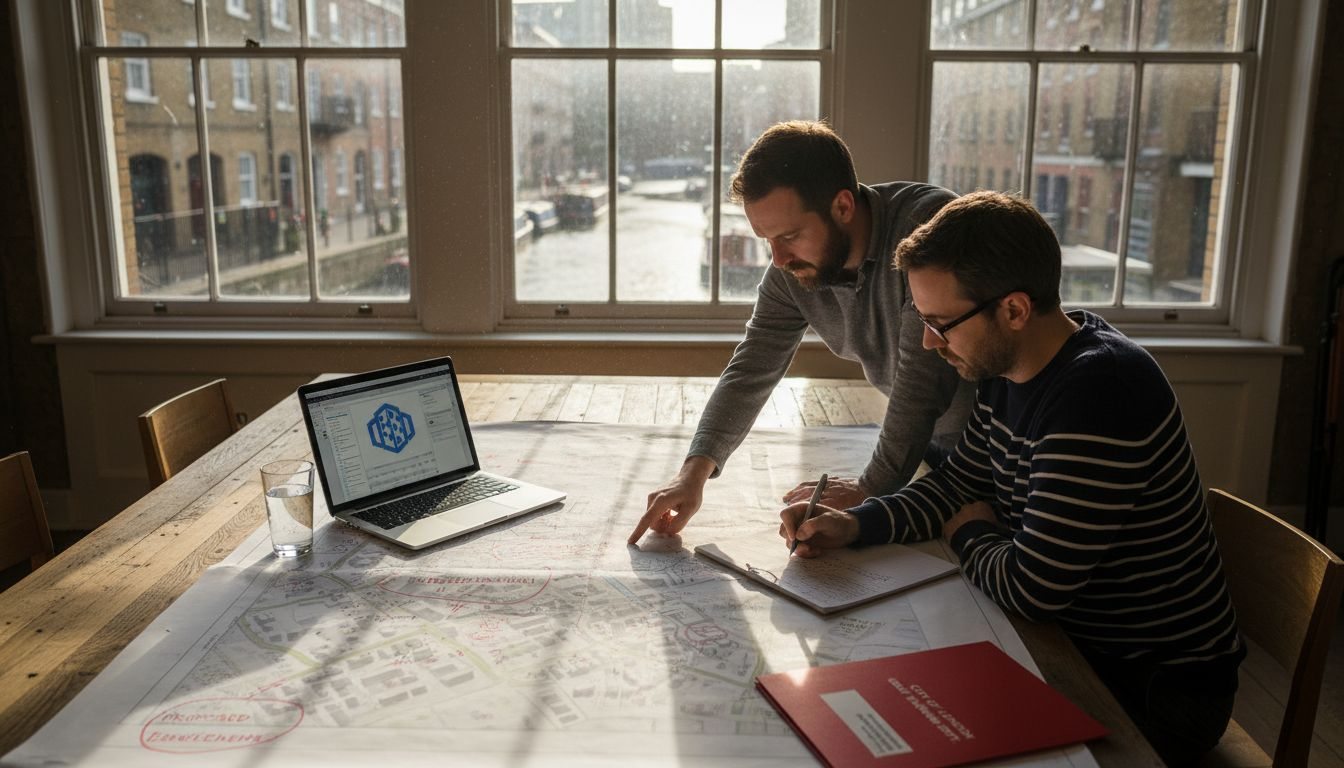
European urban planners face a critical challenge selecting the right 3D urban design models for diverse city development projects. With cities occupying 5% of Europe’s land producing 70% of EU emissions, choosing sustainable 3D urban design solutions has never been more urgent. This article provides practical selection criteria, examines real European 3D design examples, and demonstrates how these tools improve stakeholder collaboration by approximately 60%.
Table of Contents
- Selection Criteria For Evaluating 3D Urban Design Models
- Top Examples Of 3D Urban Design In Europe
- Comparison Of 3D City Modelling Solutions
- Benefits Of 3D Urban Planning For Stakeholder Collaboration
- Situational Recommendations For Urban Planners And Architects
- Discover 3D Cityplanner’s Innovative Tools For European Urban Design
- Frequently Asked Questions About 3D Urban Design Examples
Key takeaways
| Point | Details |
|---|---|
| Selection criteria | EU standards like CityGML and INSPIRE ensure legal compliance and interoperability for 3D urban models. |
| Real European examples | Rotterdam, London, and Warsaw demonstrate 3D design applications in flood resilience, biodiversity, and digital governance. |
| Platform comparison | Berlin, Amsterdam, Helsinki, NavVis, and Esri CityEngine offer varied strengths in accuracy, BIM/GIS integration, and cost. |
| Collaboration benefits | 3D visualisation increases stakeholder engagement by 60%, accelerating decisions and improving project transparency. |
| Situational recommendations | Match 3D solutions to project goals including climate adaptation, biodiversity, infrastructure precision, and budget constraints. |
Selection criteria for evaluating 3D urban design models
Choosing appropriate 3D urban design models requires assessing multiple technical and regulatory factors. European urban planners must prioritise tools that comply with CityGML standard for 3D city models and INSPIRE directives, ensuring data interoperability across EU member states. These standards guarantee that 3D models can be shared and integrated seamlessly between different municipalities, national agencies, and private stakeholders.
Spatial accuracy represents another critical selection factor. Lidar-based models deliver significantly higher precision than photogrammetry techniques, essential for infrastructure projects where centimetre-level accuracy matters. Railway alignments, utility networks, and bridge designs demand this precision to avoid costly errors during construction phases.
Integration capabilities with existing workflows cannot be overlooked. The best 3D urban design tools offer robust GIS integration capabilities and compatibility with Building Information Modelling systems. This connectivity enables planners to combine geographic data with detailed architectural models, supporting comprehensive urban analyses from transport modelling to energy efficiency assessments.
Pro Tip: Test 3D platforms with a small pilot project before committing to enterprise-wide adoption. This approach reveals integration challenges and user acceptance issues early, saving substantial time and budget later.
Environmental sustainability should guide model selection decisions. Cities occupying 5% of Europe’s land produce 70% of EU emissions, making the environmental impact of cities in Europe a pressing concern. Urban planners must evaluate how 3D design tools support green infrastructure planning, renewable energy installations, and climate adaptation strategies.
“Effective 3D urban design selection balances technical specifications, regulatory compliance, environmental priorities, and financial constraints whilst maintaining focus on project-specific outcomes.”
Cost and accessibility considerations vary widely across platforms. Small municipalities need affordable solutions with manageable learning curves, whilst large metropolitan regions may justify premium platforms offering advanced simulation capabilities. Budget allocation should account for software licences, training programmes, hardware requirements, and ongoing maintenance costs.
Top examples of 3D urban design in Europe
European cities lead global innovation in practical 3D urban design applications. These real-world implementations demonstrate how advanced modelling technologies solve complex urban challenges whilst enhancing sustainability and community engagement.
Rotterdam’s Water Square project uses 3D urban design to integrate flood-resilient green infrastructure and recreational spaces. The Rotterdam’s Water Square flood-resilience system captures excess rainfall in tiered basins that double as public squares, basketball courts, and amphitheatres during dry periods. This innovative approach exemplifies how 3D modelling enables planners to visualise multi-functional urban spaces that adapt to climate variability.
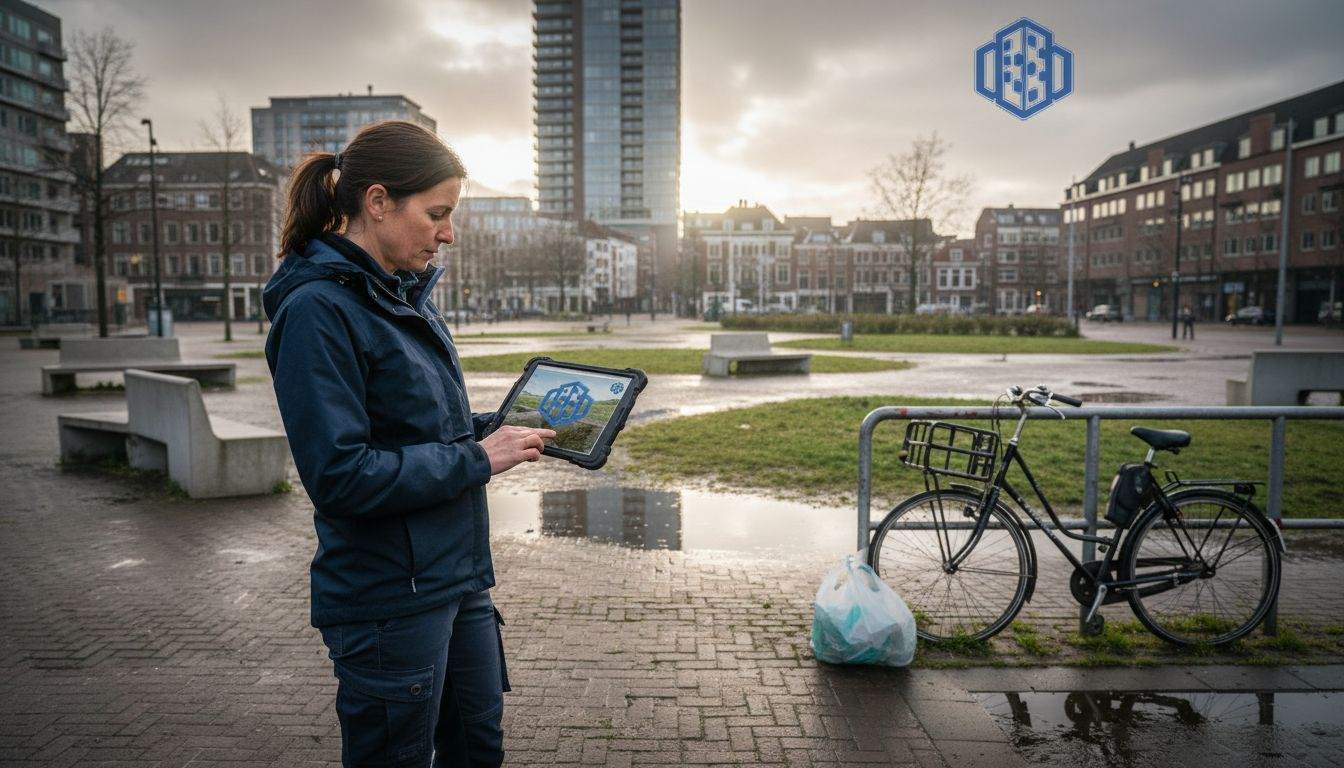
London’s biodiversity initiatives showcase another 3D design application. Eden Dock in London is a 3.83-acre urban community space designed with biodiversity and habitat gain in mind using 3D urban design tools. The Eden Dock London biodiversity project demonstrates how detailed 3D modelling supports ecological corridors, native plant selection, and wildlife habitat creation within dense urban contexts.
Warsaw has embraced 3D urban design to improve digital governance and citizen services. The city’s comprehensive 3D model integrates building footprints, infrastructure networks, and public service locations, enabling residents to explore urban planning proposals through interactive web platforms. This transparency builds trust and encourages meaningful public participation in development decisions.
EU funding accelerates 3D urban innovation across the continent. The European Urban Initiative funded 20 innovative urban projects across 13 EU countries, supporting digital and green urban transitions using 3D technologies. These EU-funded 3D urban innovation initiatives span topics from energy-efficient retrofits to smart mobility solutions, demonstrating the versatility of 3D design in addressing diverse urban challenges.
These examples illustrate how 3D urban design transcends visualisation alone. The technology enables integrated planning that balances environmental resilience, social equity, economic viability, and aesthetic quality. Urban planners examining these cases can identify transferable strategies applicable to their own regional contexts, accelerating the adoption of proven approaches whilst avoiding common implementation pitfalls. Understanding stakeholder engagement benefits remains essential when translating these international examples to local projects.
Comparison of 3D city modelling solutions
Urban planners need clear comparisons of available 3D modelling platforms to make informed technology investments. The following analysis examines leading solutions based on technical capabilities, integration potential, accuracy standards, and cost structures.
| Platform | BIM/GIS Compatibility | Spatial Accuracy | Temporal Simulation | Public Accessibility | Cost Level |
|---|---|---|---|---|---|
| Berlin | Excellent BIM integration | High (lidar-based) | Limited | Moderate | Medium |
| Amsterdam | Strong GIS compatibility | Moderate | Excellent 4D capability | High | Medium |
| Helsinki | Moderate integration | Moderate | Basic | Very High | Low |
| NavVis | Flexible BIM/GIS | High (indoor/outdoor) | Moderate | Low | High |
| Esri CityEngine | Excellent GIS | Moderate | Moderate | Moderate | Medium-High |
Berlin’s 3D city model excels in BIM compatibility, making it ideal for infrastructure projects requiring detailed architectural coordination. The platform’s lidar foundation delivers centimetre-level precision, essential for railway developments, utility networks, and historic building renovations. However, temporal simulation capabilities remain limited compared to Amsterdam’s solution.
Amsterdam prioritises dynamic urban planning through advanced 4D simulation features. Planners can model construction phases, traffic pattern changes, and seasonal variations over multi-year timelines. This temporal dimension proves invaluable for phased developments and long-term strategic planning, though spatial accuracy falls slightly below Berlin’s lidar standard.
Helsinki emphasises democratic access to urban planning data. The platform offers intuitive public interfaces allowing citizens to explore proposed developments, review zoning changes, and submit feedback directly within the 3D environment. This accessibility comes with moderate accuracy and basic integration, suitable for community engagement rather than detailed engineering.
Pro Tip: Request trial access to multiple platforms before purchasing. Evaluate each solution using a representative project from your portfolio to assess how well the platform handles your specific data types, analysis needs, and workflow requirements.
NavVis provides exceptional flexibility for projects requiring both indoor and outdoor modelling. Shopping centres, transit stations, and mixed-use developments benefit from this versatility. The higher cost reflects sophisticated hardware requirements and advanced processing capabilities, justifiable for complex projects but potentially excessive for standard residential or commercial developments.
Esri CityEngine focuses on urban analysis and scenario planning. Strong GIS compatibility enables seamless integration with existing municipal spatial databases. The platform excels at zoning studies, viewshed analyses, and regulatory compliance checks. Consider exploring accuracy comparison of 3D modelling platforms and reviewing 3D city modelling software options alongside urban planning software capabilities to understand how these solutions compare across different use cases.
Berlin, Amsterdam, Helsinki, NavVis, Esri CityEngine offer varied strengths in BIM/GIS compatibility, spatial accuracy, and urban analysis. The optimal choice depends on project requirements, existing technology infrastructure, staff expertise, and budget constraints. No single platform dominates all categories, reinforcing the importance of matching tool capabilities to specific project objectives rather than pursuing generic “best” solutions. This detailed comparison of 3D city modeling solutions helps planners navigate the decision process systematically.
Benefits of 3D urban planning for stakeholder collaboration
3D visualisation fundamentally transforms how stakeholders engage with urban planning processes. 3D urban visualisation increases stakeholder engagement by approximately 60%, improving project transparency and decision-making. This dramatic improvement stems from making abstract planning concepts tangible and accessible to non-technical audiences.
Traditional 2D plans and technical drawings create barriers between planners and community members. Residents struggle to visualise building heights, shadow impacts, and spatial relationships from blueprint representations. 3D models eliminate this comprehension gap, enabling citizens to explore proposals from street-level perspectives, understand sight-line impacts, and evaluate how developments integrate with existing neighbourhoods.
Project feedback cycles accelerate significantly with 3D visualisation tools. Stakeholders identify concerns and suggest improvements earlier in the planning process, reducing costly redesigns during later stages. Municipal approval processes move faster when council members and planning committees can assess proposals through interactive 3D presentations rather than interpreting technical documents.
“Visual clarity builds consensus. When stakeholders see identical representations of proposed developments, misunderstandings decrease and productive dialogue increases, accelerating project approvals and reducing opposition.”
European case studies demonstrate measurable collaboration improvements. Cities implementing stakeholder engagement with 3D visualisation report shortened approval timelines, reduced formal objections, and higher public satisfaction with consultation processes. These benefits translate directly into project cost savings and improved community relationships.
Transparency increases when planning authorities share 3D models through public web platforms. Citizens access proposals on their own schedules, explore details relevant to their interests, and formulate informed questions before public meetings. This preparation elevates discussion quality beyond emotional reactions, fostering evidence-based dialogue about trade-offs and alternatives. Exploring 3D visualization platforms for urban planning and understanding the collaborative benefits of 3D urban planning helps planners maximise engagement outcomes. The documented impact of 3D urban visualisation on collaboration provides compelling justification for technology investments.
Situational recommendations for urban planners and architects
Successful 3D urban design implementation requires matching technology solutions to specific project characteristics. The following guidance helps planners select appropriate tools based on common project scenarios.
- Climate adaptation projects: Use flood-resilient 3D models similar to Rotterdam’s Water Square approach. Prioritise platforms offering hydrological simulation, green infrastructure modelling, and climate scenario analysis. These features enable planners to test adaptation strategies under various precipitation and temperature projections.
- Biodiversity enhancement initiatives: Select 3D solutions exemplified by Eden Dock’s ecological focus. Choose platforms supporting habitat mapping, species corridor analysis, and vegetation modelling. Ensure the system can integrate ecological survey data and model habitat connectivity across urban landscapes.
- High-precision infrastructure projects: Deploy lidar-based CityGML-compliant models for railway alignments, utility networks, and historic building renovations. Prioritise centimetre-level accuracy and strong BIM integration. These projects cannot tolerate spatial errors that compromise engineering specifications.
- Stakeholder engagement campaigns: Pick 3D platforms supporting 4D simulation and public web access. Dynamic timelines showing construction phases and operational impacts help communities understand temporary disruptions and long-term benefits. Interactive exploration capabilities encourage meaningful participation beyond passive information consumption.
- Budget-sensitive municipal projects: Consider moderate-accuracy accessible models like Helsinki’s approach. Balance functionality against cost, especially for early-stage planning and community consultation where extreme precision matters less than clear communication.
Pro Tip: Document lessons learned from each 3D urban design project. Build an internal knowledge base capturing what worked, what failed, and why. This institutional memory prevents repeating mistakes and accelerates future implementations.
- Mixed-use developments: Evaluate platforms offering both indoor and outdoor modelling. Shopping centres, transit hubs, and residential complexes benefit from seamless interior-exterior visualisation. Consider NavVis-style solutions despite higher costs if project complexity justifies the investment.
- Long-term strategic planning: Choose platforms with robust temporal simulation capabilities. Multi-decade infrastructure plans, phased neighbourhood redevelopments, and climate adaptation strategies require modelling changes over time. Amsterdam’s 4D approach exemplifies this capability.
Review efficient 3D urban design tools recommendations and explore why use 3D visualisations in urban planning to deepen understanding of tool selection criteria. Remember that pilot projects reduce implementation risk. Test candidate platforms on representative projects before committing to enterprise-wide deployment, ensuring the technology fits your team’s workflow and skill set.
Discover 3D Cityplanner’s innovative tools for European urban design
Transform your urban planning projects with 3D Cityplanner’s comprehensive platform designed specifically for European municipalities and architectural firms. Our solution aligns with EU standards including CityGML and INSPIRE whilst offering seamless BIM and GIS integration.
Experience advanced 3D modelling capabilities supporting flood resilience planning, biodiversity enhancement, and stakeholder engagement. Our 4D simulation features enable you to visualise construction phases and long-term urban evolution, whilst automated building generation and sight-line analysis accelerate your workflow. Discover why 3D visualisations change urban planning and explore documented 3D urban design tools and efficiency gains 2026 that demonstrate measurable project improvements. Register for a 3D Cityplanner demo today to see how our platform addresses your specific urban design challenges.
Frequently asked questions about 3D urban design examples
What standards must European 3D urban design tools comply with?
European 3D urban design platforms must comply with CityGML standard and INSPIRE directives to ensure data interoperability across EU member states. These standards enable seamless sharing of 3D models between municipalities, national agencies, and private stakeholders. Compliance guarantees legal validity and supports cross-border planning initiatives.
How can 3D urban design improve public participation in city planning?
Three-dimensional models make complex planning proposals tangible for non-technical audiences, eliminating comprehension barriers inherent in traditional 2D plans. 3D visualization boosts engagement by enabling residents to explore developments from street-level perspectives and understand spatial relationships. Interactive platforms allow citizens to submit feedback directly within the 3D environment, fostering informed dialogue.
Which 3D modelling technique offers the best accuracy for infrastructure?
Lidar-based 3D models provide significantly higher spatial accuracy than photogrammetry, delivering centimetre-level precision essential for infrastructure projects. Railway alignments, utility networks, and bridge designs require this accuracy to avoid costly construction errors. Explore high accuracy 3D modelling approaches to understand technical differences between data capture methods.
Are 3D urban design tools affordable for small municipal projects?
Various pricing models and scalable platforms make 3D design accessible beyond large municipal budgets. Solutions like Helsinki’s approach offer moderate accuracy and functionality at lower costs, suitable for community engagement and early-stage planning. Review cost-effective 3D urban design options to identify platforms matching your budget constraints.
What are the environmental benefits of using 3D urban planning?
Three-dimensional urban design supports green infrastructure planning, renewable energy installations, and climate adaptation strategies that reduce city emissions. Planners can model green corridors, analyse solar potential, and test flood resilience measures before implementation. Understanding the environmental benefits of 3D urban design helps justify technology investments through measurable sustainability improvements.